Mysterious 'cold blob' in the Atlantic is a sign of the Gulf Stream weakening
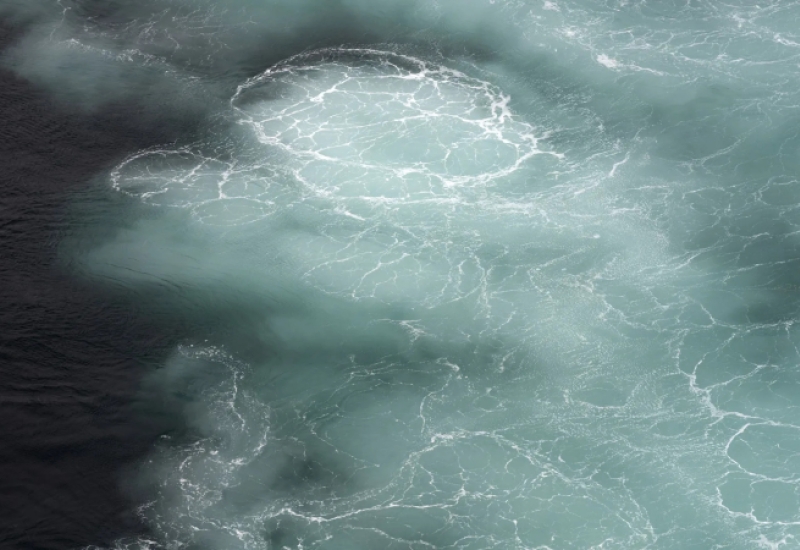
The “cold blob”, or North Atlantic Warming Hole, is an area south of Greenland and Iceland where average sea surface temperatures have actually been going down. Researchers have been working to understand the blob for years, given that it bucks the global trend of Earth getting warmer.
The new research supports previous interpretations that the blob's existence points to a weakening of ocean currents known as the Atlantic Meridional Overturning Circulation (AMOC).
The AMOC maintains Europe's relatively mild temperatures, particularly in winter, and helps regulate climate across Europe, Africa and America. Researchers have warned that a weakening AMOC has serious environmental consequences, with its collapse considered a major potential tipping point, or key threshold within Earth's systems, beyond which substantial and irreversible environmental change will occur.
Scientists are uncertain about the rate at which the AMOC is weakening, with one recent study projecting that it will slow down by around 50% by 2100. If the AMOC were to collapse completely, temperatures in parts of the Northern Hemisphere could plummet by some 10 to 15 degrees Celsius, extreme droughts would be unleashed in southern Europe, and the sea level would rise along the northeastern coastline of North America.
"Given the well-established existence of a tipping point of the AMOC, as well as recent studies finding a range of different "early warning signals" of the ocean circulation approaching such a tipping point, the strong evidence for a weakening AMOC is a serious concern for society and policy," the authors of the new study wrote in the study.
Many researchers have posited that cooling in the blob is due to reduced ocean heat transport. In other words, slowing ocean currents are delivering less heat to that region, leading to a patch of cooling. However, some researchers have also suggested that the blob could be the result of increased heat loss at the ocean surface, according to the study.
Source: Live Science