Snowball Earth: Why the planet stayed frozen for 56 million years
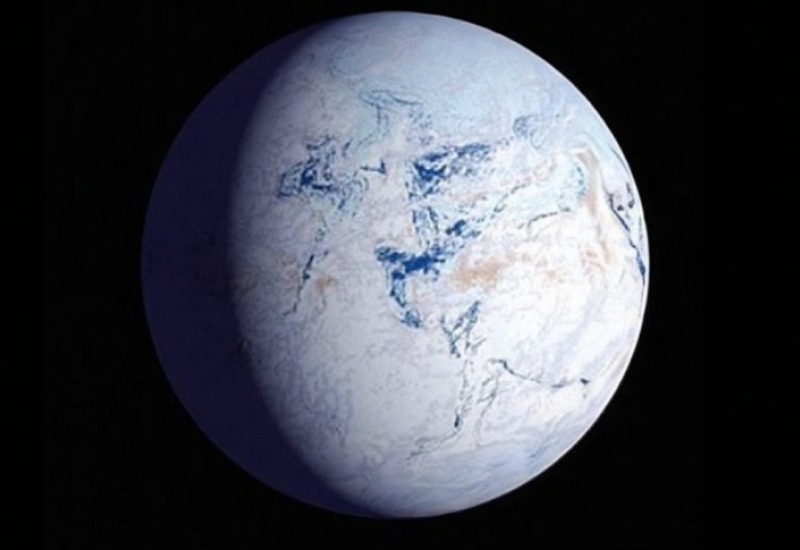
A chemical reaction on the ocean floor has emerged as the decisive factor that allowed one planet-wide ice age to last 56 million years while a later freeze ended after just 4 million years.
That result overturns the long-standing assumption that volcanic carbon alone set the clock on Earth’s most extreme climate states.
Rocks dating from more than 600 million years ago record two global freezes that lasted for dramatically different lengths of time.
By tracing how carbon moved between ocean and atmosphere, Trent B. Thomas at the University of Washington demonstrated that intensified seafloor weathering could hold greenhouse gases low enough to prolong deep freeze conditions for tens of millions of years.
In his simulations, volcanic carbon release remained within the same range for both episodes, yet only the scenario with accelerated ocean-floor reactions reproduced the prolonged glaciation.
That imbalance pointed away from the sky and toward the seabed, setting up the need to understand how the ocean floor gained such outsized control over Earth’s climate clock.
Thus, planetary climates may depend on seafloor chemistry more than scientists assumed, especially when surfaces become hostile to ordinary rock breakdown.
On an ice-covered world, greenhouse gas can rise slowly for ages, yet ocean-floor chemistry can still decide when ice retreats. Even without a full Snowball, colder oceans or seafloor cracks that stay open could tune how quickly carbon leaves the atmosphere.
The new explanation links the duration of ancient global freezes to chemical reactions on the ocean floor that continue pulling carbon from the atmosphere.
Source: Geology
Image: earth.com