A building material that lives and stores carbon
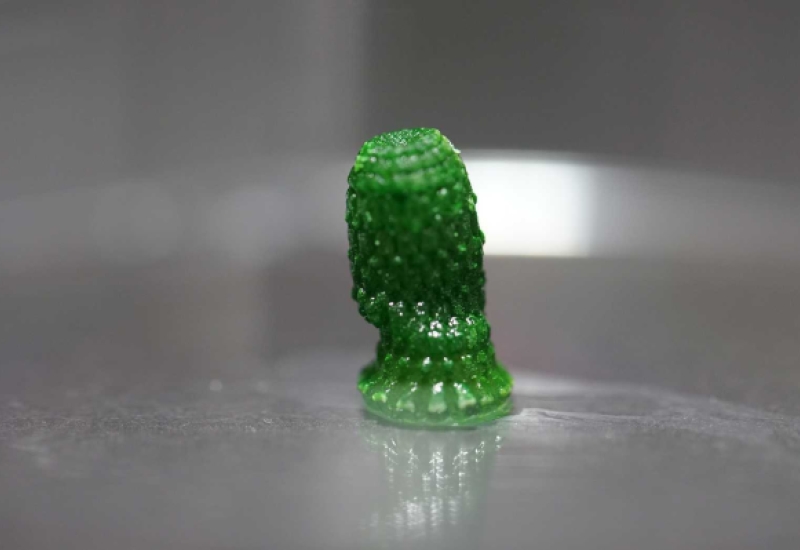
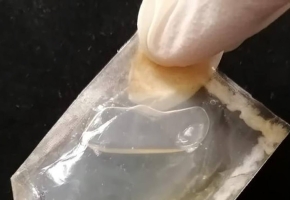
Researchers are developing a living material that actively extracts carbon dioxide from the atmosphere. Photosynthetic cyanobacteria grow inside it, forming biomass and solid minerals and thus binding CO2 in two different manners.
The idea seems futuristic: At ETH Zurich, various disciplines are working together to combine conventional materials with bacteria, algae and fungi. The common goal: to create living materials that acquire useful properties thanks to the metabolism of microorganisms – "such as the ability to bind CO2 from the air by means of photosynthesis," says Mark Tibbitt, Professor of Macromolecular Engineering at ETH Zurich.
The material can be shaped using 3D printing and only requires sunlight and artificial seawater with readily available nutrients in addition to CO2 to grow. "As a building material, it could help to store CO2 directly in buildings in the future," says Tibbitt, who co-initiated the research into living materials at ETH Zurich.
The special thing about it: the living material absorbs much more CO2 than it binds through organic growth. "This is because the material can store carbon not only in biomass, but also in the form of minerals – a special property of these cyanobacteria," reveals Tibbitt.
Laboratory tests showed that the material continuously binds CO₂ over a period of 400 days, most of it in mineral form – around 26 milligrams of CO2 per gram of material. This is significantly more than many biological approaches and comparable to the chemical mineralisation of recycled concrete (around 7 mg CO2 per gram).
Image: Yifan Cui / ETH Zurich