The Real Cost of Climate Change: How Much Damage Can the World Afford?
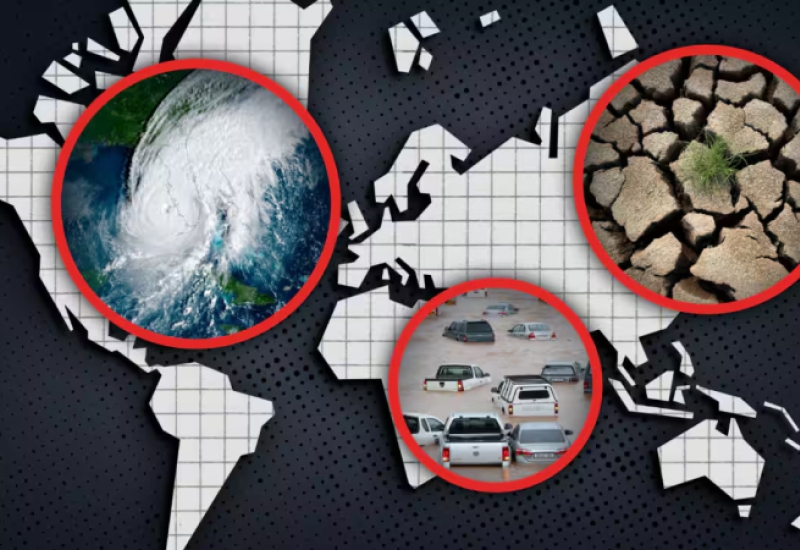
Climate change is often measured in degrees, but its consequences can also be measured in dollars. Financial Times reporting estimates that natural disasters now cost the global economy around $450 billion a year, with about 62%—or $279 billion—uninsured. Climate change, urbanisation and rising construction costs are widening this protection gap, leaving households, businesses and governments to shoulder an increasing share of the losses.
The insurance market offers one of the clearest signs of growing climate risk. In 2025, disasters including the California wildfires, Myanmar earthquake and Texas floods caused enormous losses, much of them uninsured. In Myanmar, for example, only around $100 million of $12 billion in earthquake damage was insured. Insurers have responded by raising premiums, restricting coverage and withdrawing from some high-risk markets such as California and Florida, making protection increasingly expensive or unavailable.
The economic damage extends far beyond destroyed property. Extreme weather disrupts supply chains, reduces productivity, affects agriculture and cuts corporate revenues. Research cited by the Financial Times estimates that extreme weather could cost more than $1 trillion in annual revenue across 11,000 large companies. Rio Tinto, for instance, expects an $800 million revenue shortfall linked to recent cyclones. Drought has also reduced Panama Canal capacity and disrupted energy production in France, prompting EDF to plan €8.7 billion of investment to strengthen infrastructure.
Not every company loses from a changing climate. Some benefit from increased demand for products and services linked to heat, wildfires and other climate-related conditions. But these gains are outweighed by a broader trend: climate risk is increasingly becoming financial risk.
As global temperatures potentially rise to around 2.6°C above pre-industrial levels by the end of the century, the costs of inaction could become substantially larger. The challenge is therefore not simply to calculate the damage climate change will cause, but to invest in adaptation—resilient infrastructure, stronger supply chains, early-warning systems and accessible insurance.
The real question is no longer whether we can afford to address climate change. It is whether we can afford not to.
Source: Financial Times
Image: SBS News