Lakes aren't just storing water – they're changing the carbon cycle
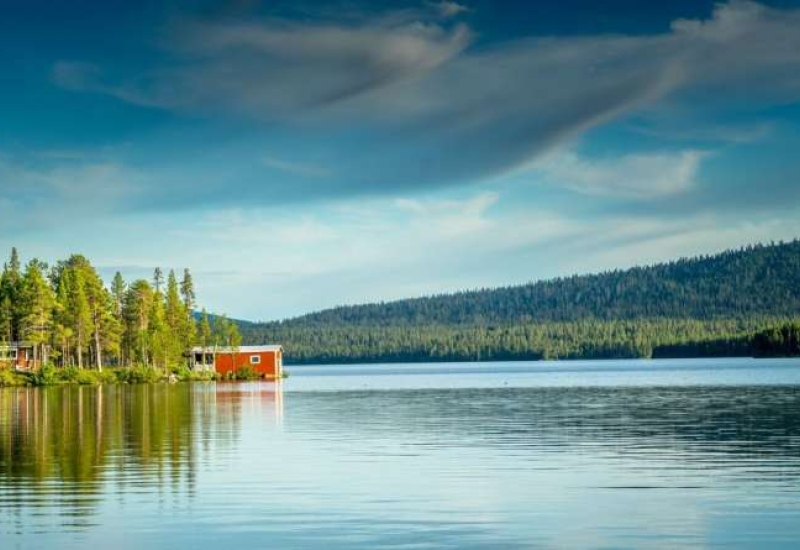
Lakes make up less than 3 percent of the landscape, but they bury more carbon than all the world's oceans combined. In the global carbon cycle, fresh water lakes and reservoirs are hot spots of carbon cycling and important players in the global carbon cycle.
Understanding that role, as well as the impacts of climate change on fresh water lakes and reservoirs, is central to the work of Kevin Rose, who joined the faculty at Rensselaer Polytechnic Institute (RPI). With a focus on aquatic ecology and biogeochemistry, Rose's work will complement ongoing research through the Jefferson Project at Lake George.
Dissolved organic carbon (DOC) refers to a broad group of molecules that come from the breakdown of organic matter in the watershed. A common example of DOC comes from tea – as dissolved organic carbons emanate from tea leaves when they are introduced into water. Similarly, DOC from leaves and other organic matter lend a brown tinge to lake water, reducing water clarity.
"In many lakes and reservoirs, DOC and algae are the top two contributors to low water clarity," said Rose. "And water clarity in turn is a huge feature that regulates a number of other characteristics of lakes and reservoirs, such as the depth to which photosynthesis occurs, the depth to which UV radiation penetrates, and heat budgets."
In his research on carbon cycling and water clarity, Rose uses instruments such as high-frequency sensors and hydrodynamic-ecological models. His research has taken him around the globe to lakes such as Lake Atitlan in Guatemala and Lake Rotorua in New Zealand.
Source: Science Daily
Image: Pexels/Rune Bjørnsen