Microplastics Have Reached One of the Body's Most Vital Organs
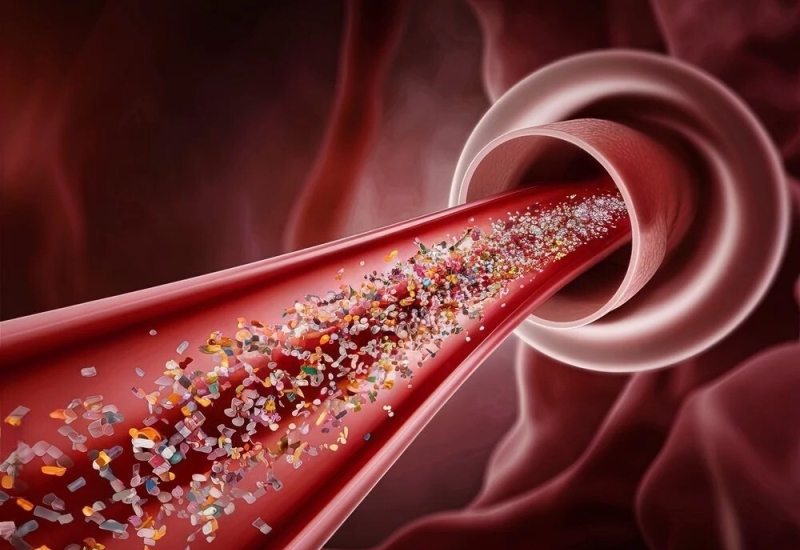
Plastic never truly disappears. Instead, it breaks down into ever-smaller fragments, some so tiny that they can pass through the body's protective barriers and accumulate inside us. These particles have already been found in human blood, lung tissue, and even breast milk. Now, researchers from Sapienza University of Rome have searched for them in one of the body's most inaccessible locations—the blood circulating through the coronary arteries that supply the heart.
The research team studied 61 patients undergoing coronary angiography at two Italian hospitals. Participants were divided into three groups according to the condition of their hearts.
The first group consisted of patients who had recently suffered a heart attack. The second included patients with chronic coronary artery disease, while the third comprised people whose coronary arteries appeared completely normal.
Blood samples were collected directly from the coronary arteries at Sant'Andrea University Hospital in Rome. Additional samples were obtained at the University Hospital of Verona, while the micro- and nanoplastic particles were identified and analyzed at the University of Campania Luigi Vanvitelli in Naples.
The researchers also recorded whether participants smoked and estimated their exposure to air pollution over the previous two years. The differences between the three groups were striking. Plastic particles were detected in 84% of patients who had experienced a heart attack.
That figure fell to 40% among patients with chronic coronary artery disease and to just 32% among those with normal coronary arteries. Heart attack patients also carried a greater variety of plastic polymers in their blood. The most common was polyethylene—the material widely used to manufacture shopping bags and food packaging.
Both smoking and air pollution were strongly associated with the presence of microplastics. Patients with greater long-term exposure to polluted air were more likely to have plastic particles circulating in their blood. Smoking had an even stronger effect: smokers were six times more likely than non-smokers to have detectable microplastics.
The combination of smoking and heavy air pollution was associated with the highest levels of exposure. Every patient who both smoked and lived in heavily polluted conditions had detectable plastic particles in their blood, compared with only 12.5% of participants who neither smoked nor experienced high levels of air pollution.
Source: European Heart Journal
Image: KIMS Hospitals