The great climate paradox: Reducing air pollution could push the Gulf Stream towards a catastrophic collapse
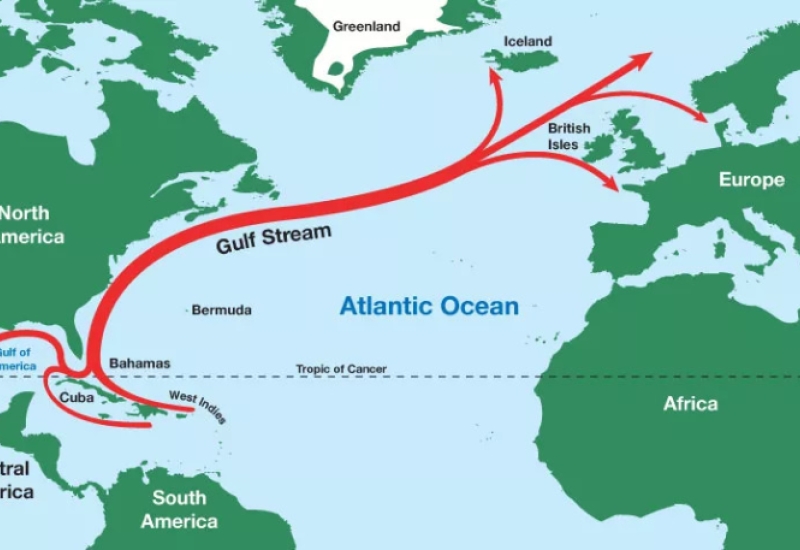
Reducing air pollution could have an unintended, and potentially disastrous side effect, a new study has found. While lowering aerosol emissions helps humans breathe easier, it could push the Gulf Stream closer to the brink of a catastrophic collapse.
Researchers found that measures aimed at cutting sulphur dioxide and black carbon emissions are weakening the Atlantic Meridional Overturning Circulation (AMOC).This is a vast network of global ocean currents, of which the Gulf Stream is just one part, that is critical for keeping the climate stable.
If AMOC were to collapse, studies have shown that temperatures in Northern Europe would plummet – plunging the UK into a “new Ice Age”. Researchers found that cutting back air pollution will cause this key current to weaken by about six per cent by 2050.
That is on top of the weakening already being caused by human–caused climate change and greenhouse gas emissions.
However, co–author Professor Laura Wilcox, a climate scientist from the University of Reading, told: 'While reducing air pollution weakens AMOC, the effect of continued increases in greenhouse gases is larger.'
AMOC functions like an enormous ocean conveyor belt, carrying heat, carbon, and nutrients around the world. The engine driving this system is the formation of very cold, dense salty water in the Arctic. As this water cools and sinks to the bottom of the ocean, it pulls in more warm water from the Atlantic after it and ensures that the whole network keeps moving.
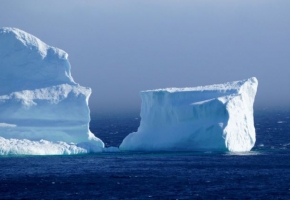
That process has been keeping global ocean currents relatively stable for around the last 6,000 years, but human activity is now pushing AMOC to the edge of collapse. As the climate warms, melting glaciers in the Greenland ice sheet are dumping millions of tonnes of fresh water into the oceans every year. That is diluting the salty water around the poles, making it less dense and weakening AMOC.
Since this process is being driven by human–caused climate change, it might seem counterintuitive that cleaning up air pollution would make the situation worse. This means that air pollution has actually been cushioning the full impact of climate change, holding back some of the warming we might have otherwise felt.
Source: Daily Mail
Image: NOAA/JPL-Caltech