Typhoons vacuum microplastics from ocean and deposit them on land
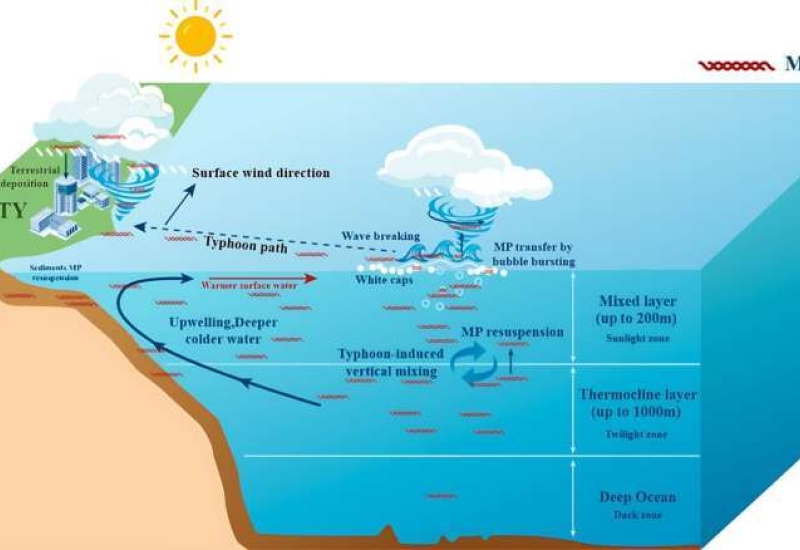
Tropical storms such as typhoons, hurricanes, and cyclones are Earth's most powerful weather systems. Born over warm oceans, they travel thousands of kilometers to land, traversing waters now polluted with plastics, from coastal runoff to the vast oceanic garbage patches.
A critical question formed: Could they be transporting this plastic? Is a typhoon just a storm, or is it also a pollution vector?
Researchers set out to find the answer. The research confirms it: Typhoons are immense, natural machines that efficiently vacuum microplastics from the ocean and spread them over land. This discovery reveals a direct, physical link between two of our greatest environmental crises, plastic pollution and climate change, a link that suggests they may now be fueling each other.
The next question was critical: Where was this plastic coming from? Was it local urban dust, or did it have a more distant origin? The particles themselves held the evidence. By analyzing their physical and chemical properties, we could trace their likely source.
The conclusion was clear: the storms were not mobilizing local litter; they were actively transferring ocean-sourced microplastics into the atmosphere and depositing them on land.
Source: Environmental Science & Technology
Image: phys.org