Physicists smash record with magnetic field 700,000 times stronger than Earth’s
Under the right conditions, superconducting magnets allow electricity to flow essentially undisturbed, producing intense magnetic fields for a variety of uses, including nuclear fusion experiments. Naturally, a larger magnetic field gives scientists more room to explore – something that may soon be available to physicists in China, thanks to the creation of a record-setting superconducting magnet.
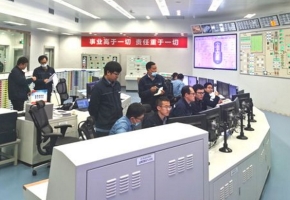
The Institute of Plasma Physics at the Chinese Academy of Sciences (CAS) announced that it had developed an all-superconducting magnet. This magnet successfully generated a record-breaking magnetic field with a strength of 35.1 tesla, which is 700,000 times stronger than the Earth’s natural magnetic field. The field held for about 30 minutes.
The previous record, which achieved 32.35 tesla, was also set by the CAS, but by a different division, the Institute of Electrical Engineering.
To be clear, superconducting magnets are already being used for a variety of applications, such as in MRI scanners or particle accelerators. These uses have their own fabrication complications to deal with, but for fusion applications, the low-temperature requirement makes things even trickier.
Nuclear fusion – colliding two light atoms to generate massive amounts of energy – naturally produces a lot of heat. That heat also transfers to the superconducting magnets, which are designed to safely confine the fusion reaction.
Source: Gizmodo
Image: Science TV Channel