Physics-tailored machine learning reveals unexpected physics in dusty plasmas
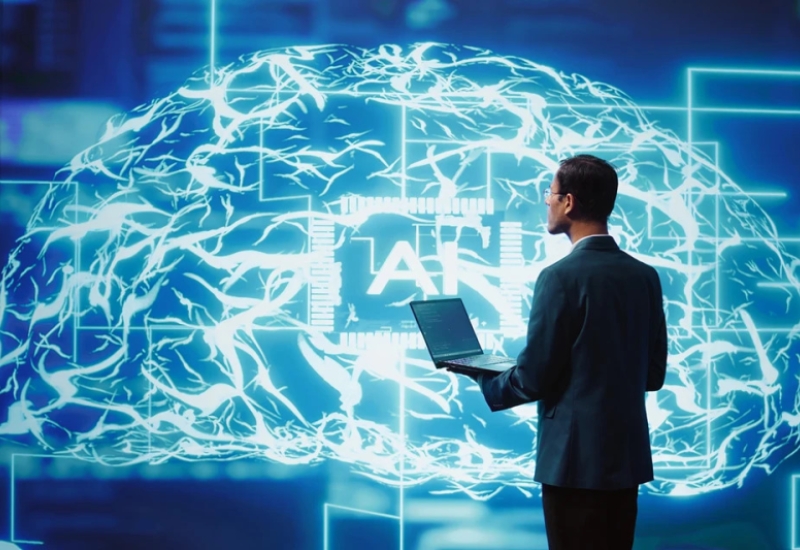
Physicists used a machine-learning method to identify surprising new twists on the non-reciprocal forces governing a many-body system. Findings by experimental and theoretical physicists at Emory University, based on a neural network model and data from laboratory experiments on dusty plasma — ionized gas containing suspended dust particles.
The work is one of the relatively few instances of using AI not as a data processing or predictive tool, but to discover new physical laws governing the natural world.
“We showed that we can use AI to discover new physics,” says Justin Burton, an Emory professor of experimental physics and senior co-author of the paper. “Our AI method is not a black box: we understand how and why it works. The framework it provides is also universal. It could potentially be applied to other many-body systems to open new routes to discovery.”
The reserach provides the most detailed description yet for the physics of a dusty plasma, yielding precise approximations for non-reciprocal forces. The researchers hope that their AI approach will serve as a starting point for inferring laws from the dynamics of a wide range of many-body systems, which are composed of a large number of interacting particles. Examples range from colloids — such as paint, ink and other industrial materials — to clusters of cells in living organisms.
Source: Emory University