Scientists create an artificial cell capable of navigating its environment using chemistry alone
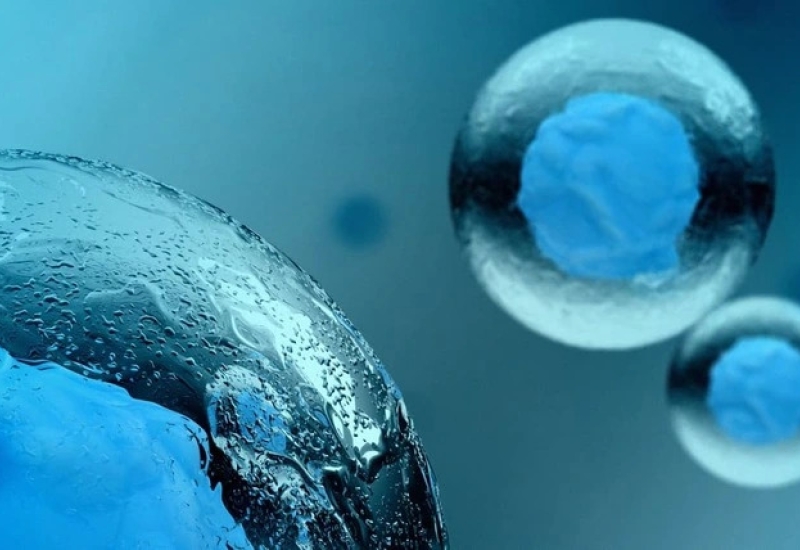
Researchers at the Institute for Bioengineering of Catalonia (IBEC) have created the world's simplest artificial cell capable of chemical navigation, migrating toward specific substances like living cells do.
This breakthrough, demonstrates how microscopic bubbles can be programmed to follow chemical trails. The study describes the development of a "minimal cell" in the form of a lipid vesicle encapsulating enzymes that can propel itself through chemotaxis.
Cellular transport is a vital aspect of many biological processes and a key milestone in evolution. Among all types of movement, chemotaxis is an essential strategy used by many living systems to move towards beneficial signals, such as nutrients, or away from harmful ones.
"Bacteria rely on it to find food, white blood cells use it to reach sites of infection, and even sperm cells navigate toward the egg through chemotaxis," explains Bárbara Borges Fernandes, a Ph.D. student in the Molecular Bionics group at IBEC, Professor at the Faculty of Physics at the University of Barcelona, and the study's first author.
"What we find particularly fascinating is that this type of directed movement can occur even without the complex machinery typically involved, such as flagella or intricate signaling pathways. By recreating it in a minimal synthetic system, we aim to uncover the core principles that make such movement possible," she adds.
Being able to engineer an artificial cell could help scientists better understand how cell units drive further evolution into more complex structures.
Source: Science Advances