Africa Is Breaking Apart Faster Than We Thought, Forming a New Ocean
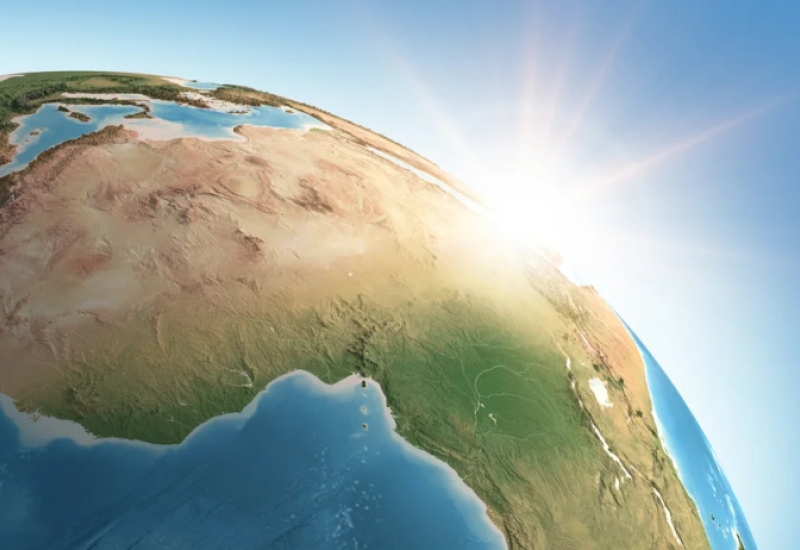
Geologists have discovered that the African continent will split apart sooner than we thought. An active rift has reached a "critical threshold" and will soon break apart, forming a new ocean.
That said, 'soon' is a relative term – it'll still take a few million years more, but that's a blink of an eye on a geological scale.
"We found that rifting in this zone is more advanced, and the crust is thinner, than anyone had recognized," says Christian Rowan, a geoscientist at Columbia University. "Eastern Africa has progressed further in the rifting process than previously thought."
The most intriguing thing about the find is its implications for our own history. The Turkana Rift Zone in Kenya is rich in early hominin fossils, which implies it was a key location for human evolution.
But the new find suggests the region may not necessarily have been more important to our ancestors than anywhere else in Africa – instead, it may just be that these geologic processes created very favorable conditions for fossilization.
Earth's current arrangement of continents feels like a constant to us, but they're always moving – albeit extremely slowly. More than 200 million years ago, they were all smushed together in one supercontinent, and it's predicted that in the distant future, they'll mostly end up getting back together again.
Where two tectonic plates meet, mountains form. Where they drift apart, oceans are born.
For the new study, scientists focused on a specific part of that system: the Turkana Rift, which stretches for hundreds of kilometers through Kenya and Ethiopia. The team analyzed seismic measurements previously taken in the region, and calculated how thick the crust is there.
Source: Nature Communications
Image: Shutterstock/FOTODOM/titoOnz