The Hidden Danger of Lunar Micrometeoroid Storms
The Moon has no atmosphere, no weather, and no wind. Yet it faces an invisible bombardment more relentless than any terrestrial storm, a constant rain of micrometeoroids, tiny fragments of rock and metal travelling at speeds up to 70 kilometres per second. As NASA's Artemis program prepares to establish a permanent lunar base, understanding this silent threat has become critical to keeping future astronauts safe.
A new analysis led by Daniel Yahalomi quantifies just how intense this bombardment will be. Using NASA's Meteoroid Engineering Model, the researchers calculated impact rates for a hypothetical lunar base roughly the size of the International Space Station. The numbers are sobering, between 15,000 and 23,000 impacts per year from particles ranging from a millionth of a gram to ten grams.
These aren't gentle collisions. Even a particle massing just one microgram which would be invisible to the naked eye, strikes with enough energy to crater metal and potentially puncture equipment. Unlike Earth, where our thick atmosphere vaporises most debris before it reaches the ground, the Moon's vacuum offers no such protection. Every micrometeoroid that approaches the lunar surface makes contact at hypervelocity.
The analysis provides mission designers with a mathematical relationship describing how many impacts would penetrate shielding based on the shield's specifications and location. This allows engineers to calculate the precise thickness of protection needed to reduce risk to acceptable levels without adding unnecessary mass to structures launched from Earth.
For astronauts living months at a lunar base, this mostly invisible rain of debris will become part of daily life, a reminder that even on our closest celestial neighbour, space remains fundamentally hostile to our presence.
Source: Cornell University
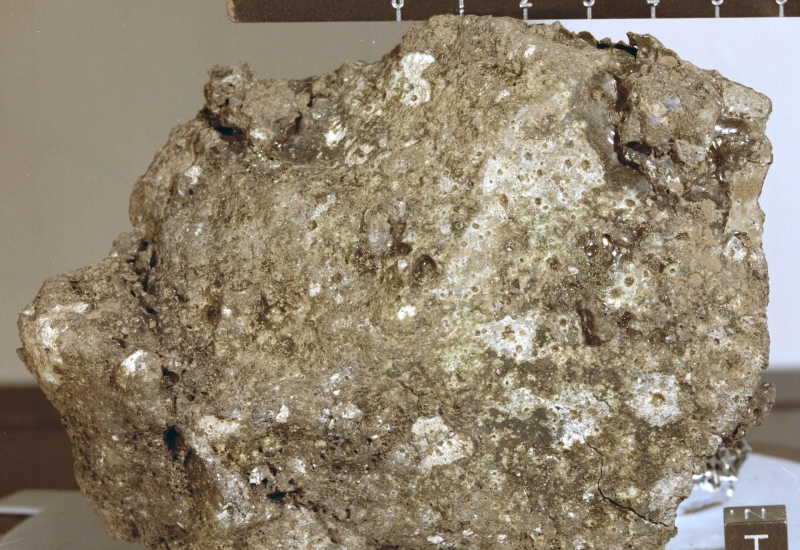
Image: James Stuby/NASA image